Why the sling bag keeps showing up in product line reviews
A sling bag solves a very specific everyday problem: people want quick access to the basics without carrying a full backpack or stuffing everything into trouser pockets. For commuting, short travel, cycling, or just moving through a busy city, the format works because it keeps essentials close, visible, and easy to reach. That is why sourcing teams and product managers keep seeing demand for the same compact silhouette in different trims, from a crossbody sling bag to a more technical travel sling bag.
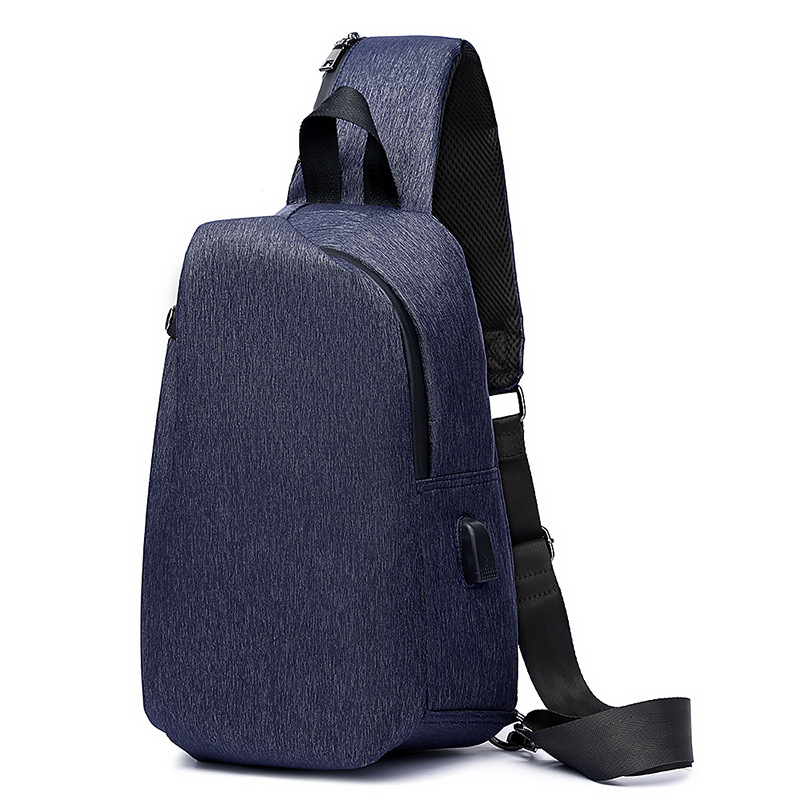
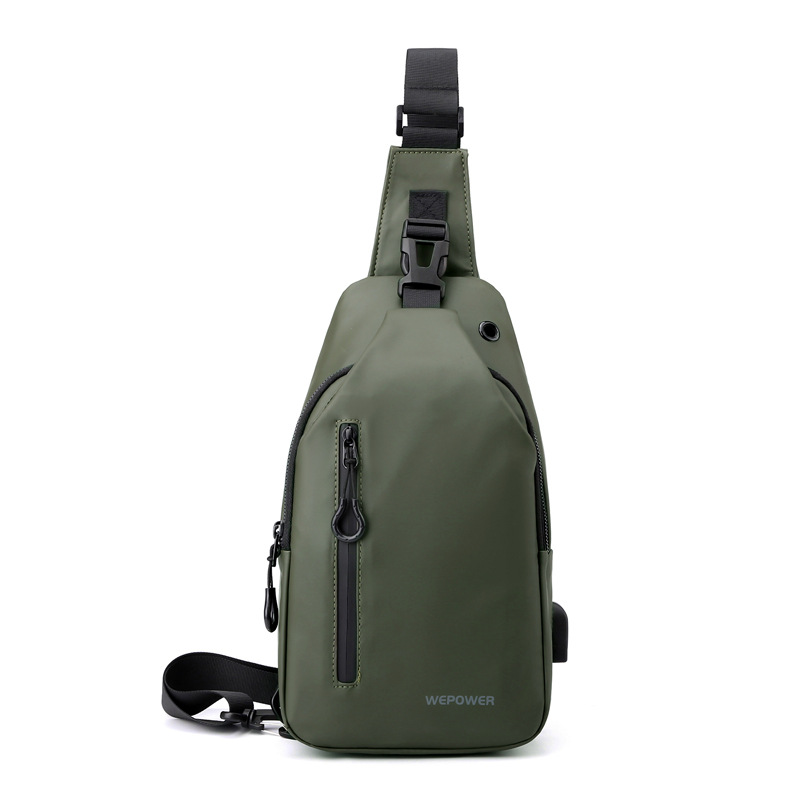
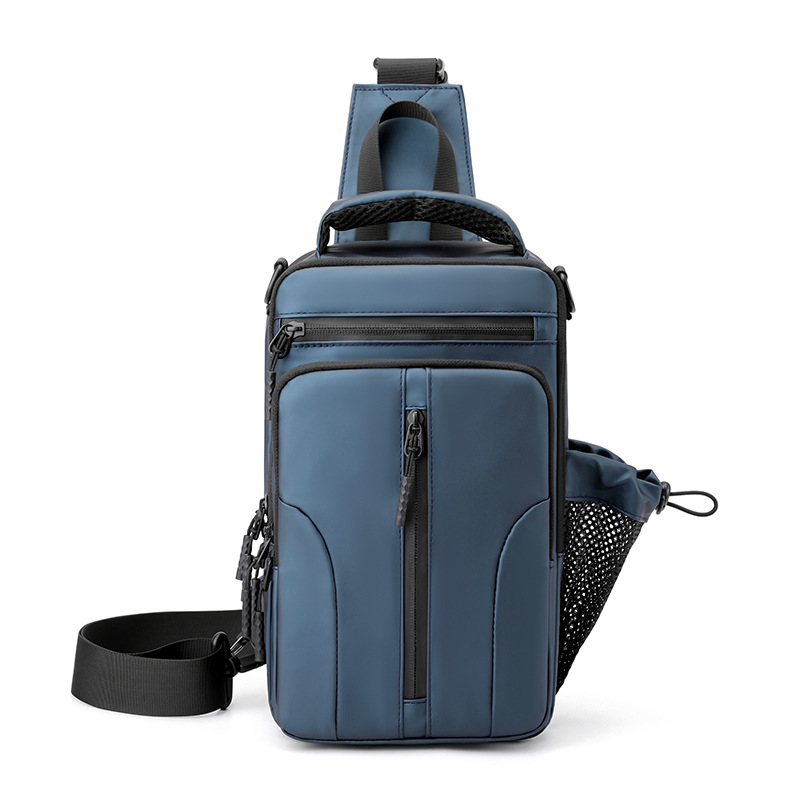
The visible bag style here is a single-strap, softgoods carry item with a compact body, a curved zipper line, and a breathable-looking back panel. Those details may sound simple, but they matter. In day-to-day use, they affect comfort, security, and how much the user actually wants to wear the product for hours at a time. A bag that looks light but sits awkwardly on the body will lose favor quickly.
What the visible construction tells a buyer
From the product details provided, this is a sewn textile bag assembly rather than a rigid molded shell. The form is slim and rounded, almost teardrop-like, with one main zippered compartment, an adjustable black webbing strap, and a rear panel that appears to use black mesh or breathable padding. That combination is common in commuter carry because it balances structure with comfort.
For buyers, the useful point is not just the appearance. A single zippered compartment suggests a straightforward carry layout for phone, wallet, keys, charger, and other small items. The strap adjuster and top loop add practical handling options. The mesh-backed rear panel is also worth noting, because ventilation is one of those small features that only becomes important after the customer has worn the bag for a while on a warm day.
The materials appear to be woven synthetic textiles with black trim and hardware, but the exact fiber content is not visible. That is worth keeping in mind when writing specifications or comparing samples. A dark, textured synthetic face fabric can be a good everyday choice because it usually hides scuffs better than smooth finishes, though the actual wear performance still depends on the yarn, coating, and stitch quality. We should not assume more than the sample reveals.
Where this format fits in the market
The sling format sits between a pocket-heavy pouch and a full backpack. That middle ground is why it sells across categories. A men’s sling bag may lean more utilitarian in color and hardware. A women’s sling bag may be styled with softer proportions or refined trim. A small sling bag is often chosen for minimal carry and city errands. The core function, however, remains the same: fast access with less bulk.
It is also easy to confuse sling bags with other compact accessories. A leather sling bag may target a more polished office-to-evening audience, while a fabric version like the one described here is usually better suited to daily movement and casual travel. An anti-theft sling bag, by contrast, is a different proposition entirely and usually includes hidden zippers, security routing, or cut-resistant features that are not visible in this sample. Buyers should not use the sling label alone as a proxy for security.
Selection criteria that actually matter
1. Carry pattern
Decide whether the bag is meant for chest carry, back carry, or quick swing access. A crossbody sling bag should feel stable when worn diagonally, not only look attractive on a hanger. If the strap feels narrow or the rear panel is too slick, the bag may shift during walking or cycling.
2. Compartment logic
One main compartment is fine for many users, but buyers should ask whether the target customer expects internal organization. A commuter who carries earbuds, a charger, and transit cards may need at least one small pocket or divider. A simple layout can still work well, but only if the customer’s load is genuinely simple.
3. Comfort and ventilation
Back-panel mesh, padding, and strap width matter more than some brands admit. A travel sling bag gets judged in motion, not on a table. If the bag will be worn for longer stretches, the rear panel and strap attachment points should be checked for comfort and stitch reinforcement.
4. Hardware and closure quality
Zippers, buckles, and webbing adjusters can make or break the user experience. A small failure here becomes a daily annoyance. The visible design uses a curved zipper opening and a side adjuster, so the smoothness of those parts should be tested during development. Even a compact bag needs consistent zipper travel and secure strap adjustment.
Common mistakes when specifying a sling bag
One common mistake is overloading the bag with features the silhouette cannot support. A compact sling bag is not the place to force in too many compartments, heavy padding, or bulky trims. That usually hurts comfort and makes the product feel crowded.
Another mistake is assuming one design suits every audience. A men’s sling bag and a women’s sling bag may share the same construction method, but styling decisions still affect sell-through. Color, strap width, surface texture, and the profile of the bag body all influence how customers perceive the product.
A third issue is making unsupported claims. If water resistance, anti-theft features, exact capacity, or laptop compatibility are not confirmed, they should not be marketed as facts. That sounds obvious, but it is one of the fastest ways to create returns and warranty disputes. Buyers know the difference between a useful compact bag and a spec sheet that has been stretched too far.
Practical buyer advice for sourcing teams
When reviewing samples, check how the bag behaves when partly filled. A well-built single-strap sling backpack should hold its shape without feeling stiff. Inspect the zipper curve, the strap attachment points, and the back panel finish. Look at how the webbing adjuster locks under load. These are small tests, but they reveal more about day-to-day use than a brief product photo ever will.
If the target customer is a commuter or traveler, prioritize easy reach and body comfort first. If the target customer is more style-driven, then the fabric finish, color depth, and trim alignment matter more. That distinction sounds simple, yet many product failures happen because the bag is designed for the wrong kind of user behavior.
FAQ for product teams
Is a sling bag the same as a backpack?
Not really. It is usually lighter, smaller, and worn with one strap across the body or over one shoulder. That changes how it balances and what users expect from it.
Can a small sling bag replace a daily backpack?
Only for light carry. If the user needs files, larger electronics, or multi-item organization, a full backpack is still the better fit.
Should the bag be marketed as an anti-theft sling bag?
Only if the design truly includes security-oriented construction. Do not rely on the category name alone.
What to do next
If you are sourcing or developing this type of bag, start with the use case before the aesthetic. Decide whether the customer needs a commuting piece, a casual urban carry item, or a travel sling bag for essentials only. Then confirm the strap comfort, zipper quality, and pocket layout against that use case. The right sling bag is usually not the most complex one. It is the one that stays out of the way, carries what it should, and holds up after repeated use.