Why a messenger bag still earns a place in modern carry
A messenger bag has survived a lot of category churn for a reason: it is one of the few everyday bags that can move from commute duty to fieldwork without looking out of place. For engineers, sourcing managers, and product teams, the appeal is less about style and more about how the bag behaves in use. A good shoulder messenger bag needs to carry documents, a laptop, camera gear, or daily essentials while staying easy to access on the move.
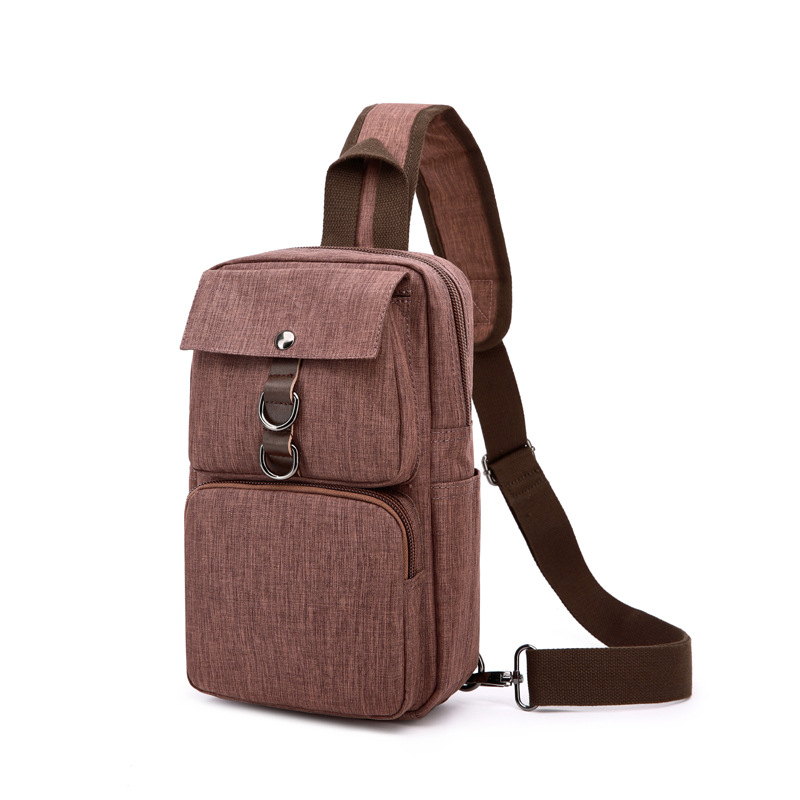
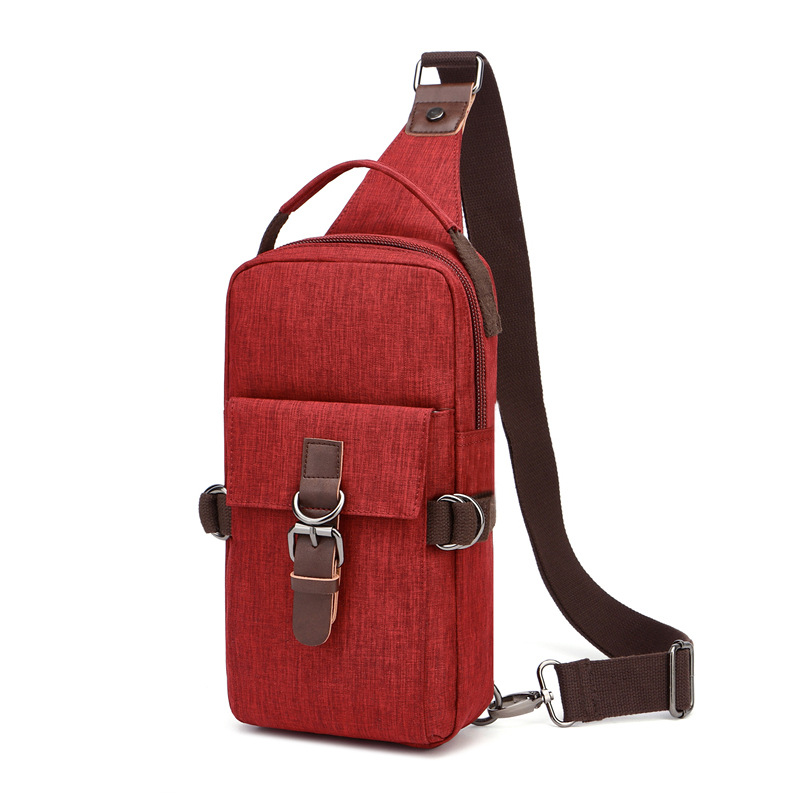
The version pictured here fits that practical brief well. It is a soft-bodied, canvas-style satchel with a flap-over front, two vertical buckle straps, an adjustable shoulder strap, and multiple front storage sections. That combination suggests a utility-first design: organized enough for daily carry, rugged enough for rough handling, and casual enough for office-to-site use. It is not trying to be a hard-shell case, and that is part of the point.
What buyers can tell from the construction
The most visible signal is the textile build. The exterior appears to be a heavy woven fabric in a gray or olive-tan range, paired with brown strap accents and metal buckle hardware. In bag production terms, that points to a sewn cut-and-stitch construction rather than molded assembly. That matters because cut-and-sew bags are often easier to adapt in color, pocket layout, strap length, and trim options when a sourcing team needs variants.
The structure is rectangular but not rigid. It has a wide flap, a gusseted body, and reinforced strap attachments, which usually means the designer wanted the bag to hold shape without turning it into a box. For daily carry, that is a useful compromise. Soft bags are more forgiving when loaded unevenly, though they can also sag if the base is not well supported. Buyers should pay attention to that when comparing sample builds.
Canvas, leather trim, and nylon: the practical trade-offs
In the real market, a canvas messenger bag competes with leather and nylon versions. Each material family serves a different buyer expectation.
Canvas
Canvas has a workwear association that still sells. It tends to read as casual messenger bag territory, with a tactile surface and a less corporate appearance than full leather. It can be attractive for lifestyle, travel, school, or photography use. The caution is simple: canvas alone does not guarantee water resistance or abrasion performance. A buyer should ask about coating, lining, and seam finishing instead of assuming durability from the fabric weight alone.
Leather
A leather messenger bag usually signals a more polished, office-oriented look. It can age well, but it often costs more and may add weight. If a brand wants a premium business carry product, leather trim or full leather construction can help. For higher-volume utility programs, though, that premium may not match the intended use case.
Nylon
A nylon messenger bag typically wins on lightness and everyday practicality. It is often chosen for commuters and travel users who want lower weight and easier cleaning. The trade-off is aesthetic: nylon can feel more technical and less characterful than canvas or vintage-inspired styles.
Why the visible features matter to end users
The visible selling points here are not subtle, and that is useful. The dual buckle-flap closure adds a sense of security. The multiple front pockets or pocket-like panels can help separate small tools, notebooks, chargers, or camera accessories. The wide adjustable shoulder strap should improve carry comfort, especially when the bag is loaded for a long day.
That said, buyers should not confuse visible organization with internal protection. A soft-bodied messenger bag may be excellent for documents and daily items, but unless padding is specified, it should not be assumed to protect electronics or fragile gear. This is one of the most common mistakes in bag sourcing: judging protection by exterior styling rather than the unseen build details.
Selection criteria that actually help at purchase time
When comparing messenger bag options, start with the use case. Is it for commuting, school, travel, field service, or camera carry? The answer determines whether the buyer needs more pocketing, a stronger strap, a more structured base, or a cleaner profile.
Then review the features that are visible here and usually worth confirming in a sample request: strap reinforcement, buckle durability, seam quality at stress points, pocket depth, flap closure behavior, and whether the bag stands up on its own when placed down. For soft textile bags, those details often matter more than the headline fabric label.
Also check the trim carefully. In this design, the brown elements may be leather or synthetic leather, but that cannot be assumed from appearance alone. If your specification depends on genuine leather, make that explicit. If it does not, synthetic trim may be the better sourcing decision for consistency and cost control.
Common mistakes in messaging and sourcing
One mistake is overpromising laptop compatibility without checking internal dimensions. Another is describing a canvas messenger bag as “weatherproof” simply because the fabric looks dense. The market is full of product pages that blur those lines, but engineering and sourcing teams cannot afford that habit.
A second mistake is ignoring how the bag will be worn. Messenger bags ride differently than backpacks. They are easier to swing forward and access, which is a real advantage in transit or field settings, but they can fatigue one shoulder if overloaded. That is not a flaw; it is a design trade-off that should be matched to the buyer.
Who this bag style suits best
This style fits commuters, students, photographers, and field workers who prefer a hand-accessible carry solution. It also fits brands looking for a casual messenger bag with a vintage or utility feel. The look is less formal than a briefcase and less sporty than a backpack, which gives it a useful middle ground.
If the end customer wants rugged everyday carry with a more classic profile, this is a strong category. If they want hard protection, tech padding, or wet-weather performance, they need to look deeper into the specification rather than the silhouette.
What to ask before you place an order
Ask for the material breakdown, the trim type, and the hardware specification. Confirm whether the body is canvas, cotton-canvas, or another woven textile. Request clarity on pocket count, reinforcement points, and closure assembly. If the bag is being developed as a private-label item, ask for sample photos of the interior and stress areas before approving production.
A messenger bag is only “simple” until the first use case exposes a weak strap, a shallow pocket, or a flap that does not sit correctly. The best buying decisions come from treating it as a functional sewn product, not just an accessory.
Next step
If you are evaluating this style for a product line, start with the use case and the build details, then compare canvas, leather-trim, and nylon options against your target user. The right messenger bag is the one that fits the load, the look, and the daily routine without forcing compromises that show up after a few weeks of use.